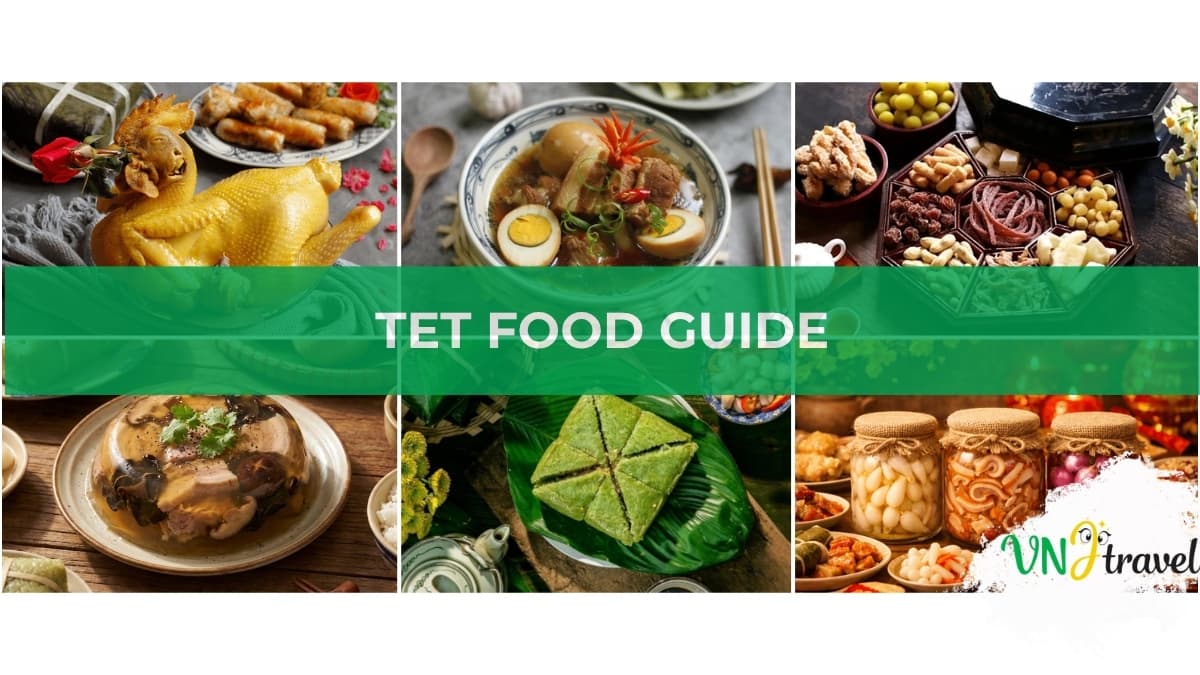
Do you know which traditional dishes typically appear during Vietnamese Tet? Let’s discover signature Vietnamese New Year’s dishes in this guide.
The Cultural Meaning of Vietnamese New Year’s Food
Vietnamese New Year food traditions play a central role in Tet celebrations, connecting daily life with spiritual beliefs and long-standing cultural philosophies.
Tet Food and Spiritual Beliefs
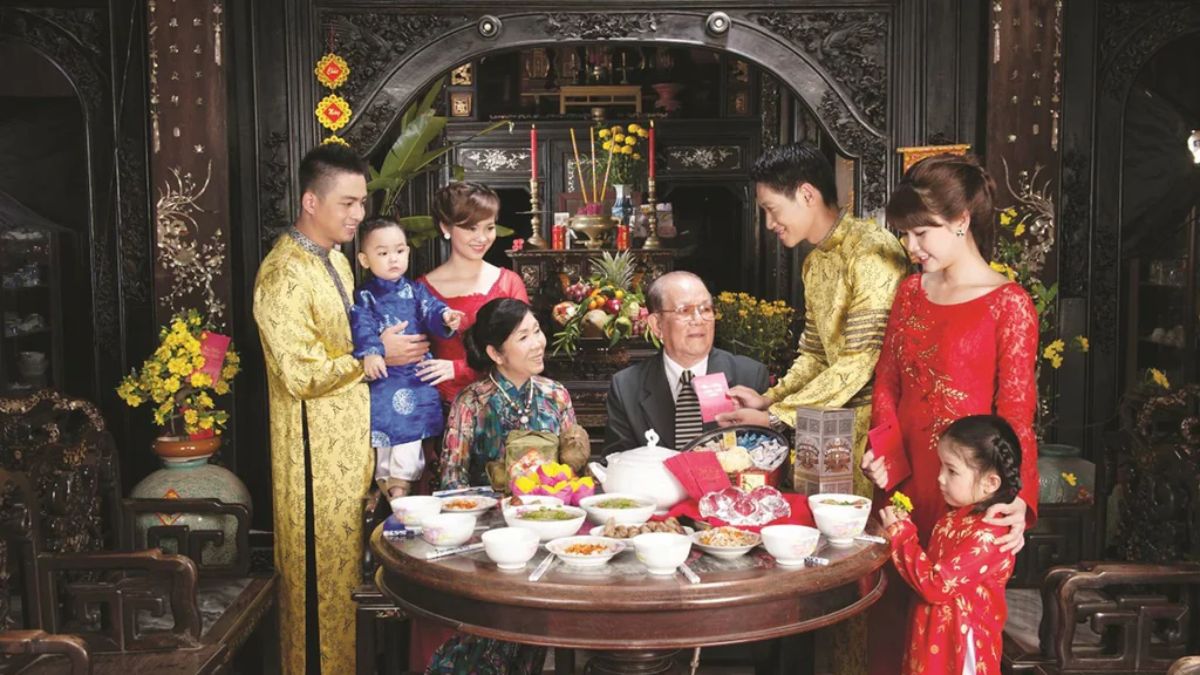
Vietnamese Tet cuisine functions as a link between the physical world and ancestral traditions.
- Families prepare traditional dishes for both family meals and ancestral offerings.
- People view food as a symbolic medium through which they express respect and remembrance.
- Offerings placed on ancestral altars represent gratitude and continuity between past and present generations.
Yin and Yang and the Five Elements in Tet Dishes
The principles of yin and yang influence how people select and combine Tet dishes.
- Cooks choose ingredients and flavors to create a balance between hot and cold elements.
- Tet dishes reflect the five-element theory – wood, fire, earth, metal, and water – through their colors, textures, and cooking methods.
- Harmony in food presentation mirrors the broader Vietnamese belief in balance as a foundation for well-being.
Tet food operates as a symbolic system that communicates cultural values and shared expectations for the coming year.
Iconic Dishes of the Vietnamese New Year
The “Soul” of Tet: Sticky Rice Cakes
Vietnamese families consider sticky rice cakes among the most important foods they prepare for the Lunar New Year.
Banh Chung vs. Banh Tet: Regional Sticky Rice Cakes
Here are the most representative sticky rice cakes prepared for the Vietnamese New Year, reflecting regional differences, symbolic meanings, and shared cultural values.
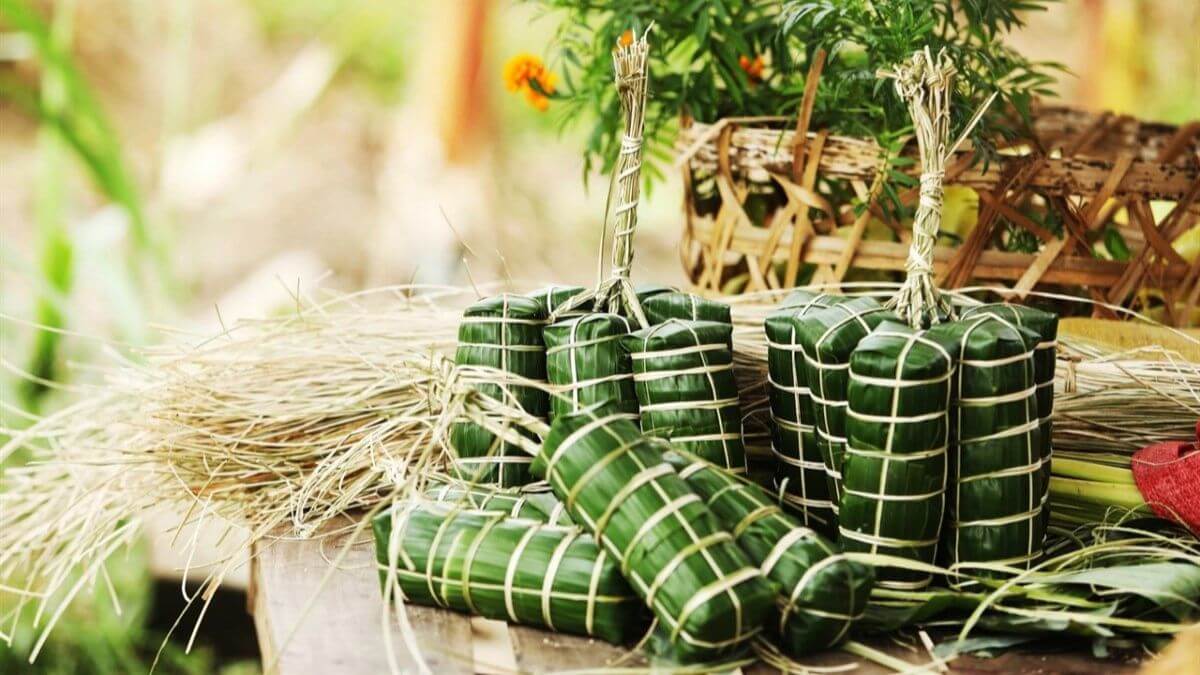
- Regional distinction: Banh Chung is traditionally associated with Northern Vietnam, while Banh Tet is more common in Central and Southern regions.
- Shape and meaning: Banh Chung is square, symbolizing the Earth; Banh Tet is cylindrical, representing the sky and the cyclical nature of time.
- Cultural role: Both cakes embody filial piety and gratitude toward ancestors and are essential offerings on family altars during Tet.
- Core ingredients: Glutinous rice, mung beans, pork belly, and wrapping leaves (dong leaves or banana leaves).
- Preparation method: Ingredients are layered with rice on the outside and mung bean paste and pork in the center, then wrapped tightly in leaves.
- Cooking process: Cakes are boiled for approximately 8-10 hours.
- Use during Tet: The cakes can be stored for one to two weeks and consumed throughout the New Year period.
The Center of the New Year Meal: Traditional Tet Meat Dishes
In Vietnamese New Year cuisine, meat-based dishes play a central role in the Tet feast. These dishes are not only meant to nourish the family during the holiday but also carry symbolic meanings related to prosperity, harmony, and seasonal traditions.
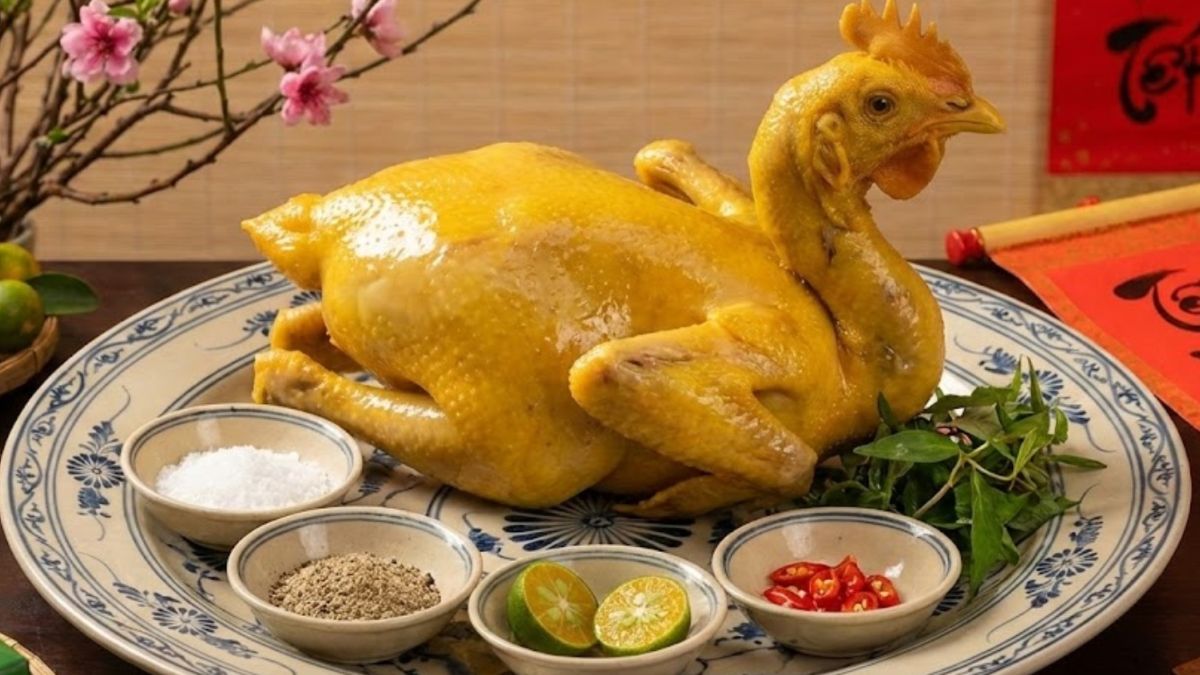
Ga Luoc (Boiled Chicken):
- A whole boiled chicken is commonly placed at the center of the Tet meal or on the ancestral altar.
- Its golden-yellow skin represents wealth, good fortune, and a bright beginning for the new year.
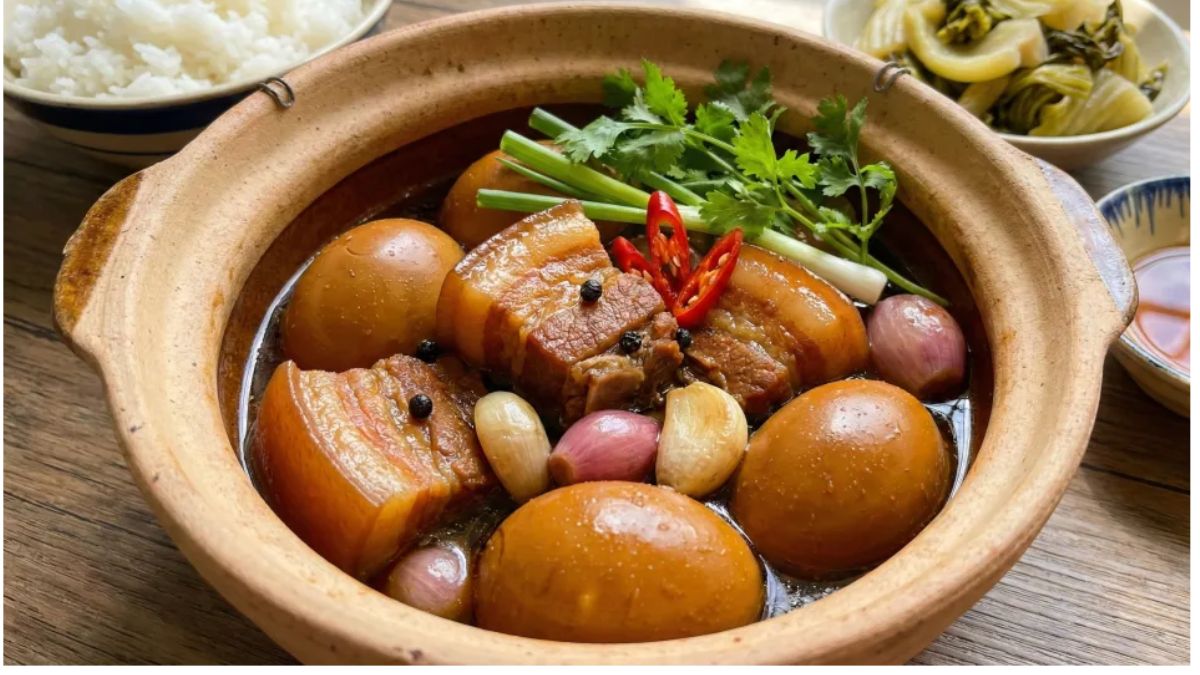
Thit Kho Tau (Braised Pork with Eggs):
- Features large cuts of pork belly and hard-boiled eggs simmered in coconut water.
- The square-shaped pork and round eggs symbolize the balance of Yin and Yang, expressing harmony, completeness, and stability for the year ahead.
Thit Dong (Jellied Meat)
- A traditional Northern specialty made by simmering pork with spices until it naturally sets into a clear jelly.
- Thit Dong is closely associated with the cool winter climate of Northern Vietnam and offers a refreshing contrast to richer Tet dishes.
Together, these traditional Tet meat dishes form the core of the Vietnamese New Year meal, reflecting regional customs, seasonal ingredients, and long-standing cultural beliefs.
📞 +84.862.897.858 (Whatsapp/Viber/WeChat)